Korean traffic safety signs (교통안전표지) come in five types: caution signs, regulatory signs, instruction signs, supplementary signs and road markings (Enforcement Rules, Article 8). Before memorizing individual signs, learn the shape-and-color rule: yellow triangle = watch out, red-ringed circle = don’t, blue background = do this. With that, you can guess the meaning of most signs you have never seen. The written test shows sign pictures and asks what they mean or how to drive, and on the road, missing a No Entry, Stop or No Passing sign is an instant violation. Many Korean signs have Korean text only, so shape and color matter even more for foreign drivers. Everything below was checked against the sign names and “meaning” column of Annex 6 to the Enforcement Rules (amended Nov 14, 2024; checked November 2026). The number next to each sign is its official serial number in Annex 6.
The five types at a glance
| Type | What it does (Art. 8) | Shape and color | Numbers |
|---|---|---|---|
| Caution (주의표지) | Warns of a dangerous road condition or hazard ahead | Yellow triangle with red border | 100s |
| Regulatory (규제표지) | Prohibits or restricts | White circle with red ring (exceptions: inverted triangle, octagon, red or blue background) | 200s |
| Instruction (지시표지) | Tells you how to travel or which way to go | Blue background, white symbols | 300s |
| Supplementary (보조표지) | Adds detail to the signs above (distance, time, section, vehicle type) | White rectangular plate, black text | 400s |
| Road markings (노면표시) | Shows warnings, rules and instructions on the road surface as lines, symbols and text | White, yellow, blue, red and more | 500s |
Telling them apart by shape and color
Annex 6 says text and symbols on caution, regulatory and supplementary signs are black, and on instruction signs white, with a few exceptions:
- No Entry and Stop signs have a red background with white text. Think of red-background signs as “stop” or “do not enter.”
- No Stopping/No Parking and No Parking signs have a blue background. Despite the blue, they have a red ring and slash, so they are regulatory, not instruction signs.
- Slow and Yield are inverted triangles (point down), not circles, and Stop is an octagon. Test questions sometimes rely on shape alone.
- The school zone supplementary plate has a yellow background, and section start / within section / section end plates use red symbols.
In short: triangle (yellow) → hazard ahead; red-ringed circle → don’t; blue circle or square → do this.
Caution signs: “this hazard is ahead”
Most caution signs stand on the right side of the road 50–200 m before the hazard (the distance varies by sign). Once you see one, the hazard is close, so slow down and get ready.
| Sign | No. | Name | Meaning | Tip |
|---|---|---|---|---|
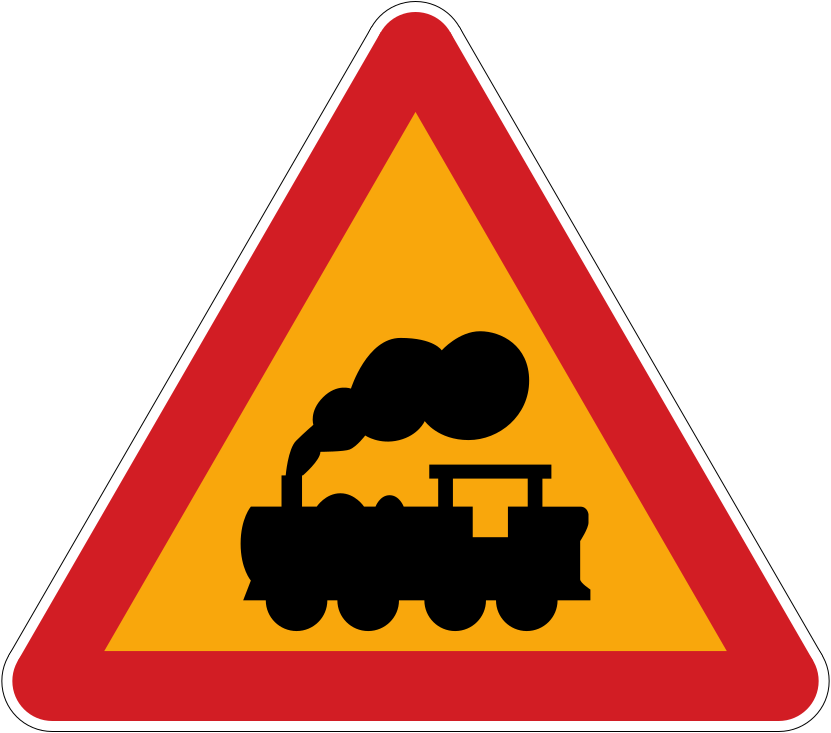 |
110 | Railroad crossing (철길건널목) | Railroad crossing ahead | Stop before the crossing and check it is safe (Road Traffic Act Art. 24) |
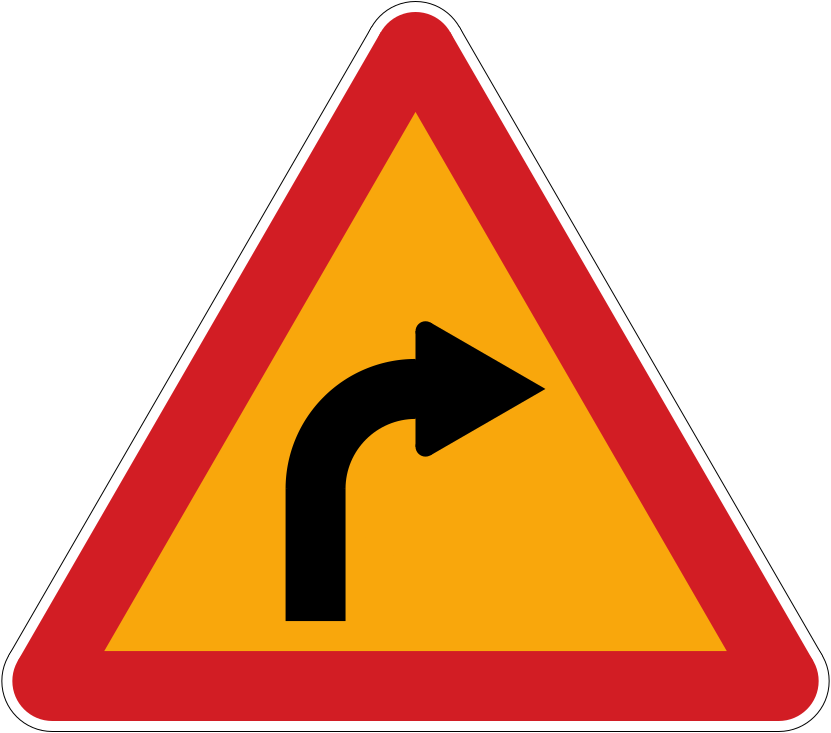 |
111 | Right curve (우로굽은도로) | Road curves to the right | Slow down before the curve. 112 is a left curve, 113–114 double curves |
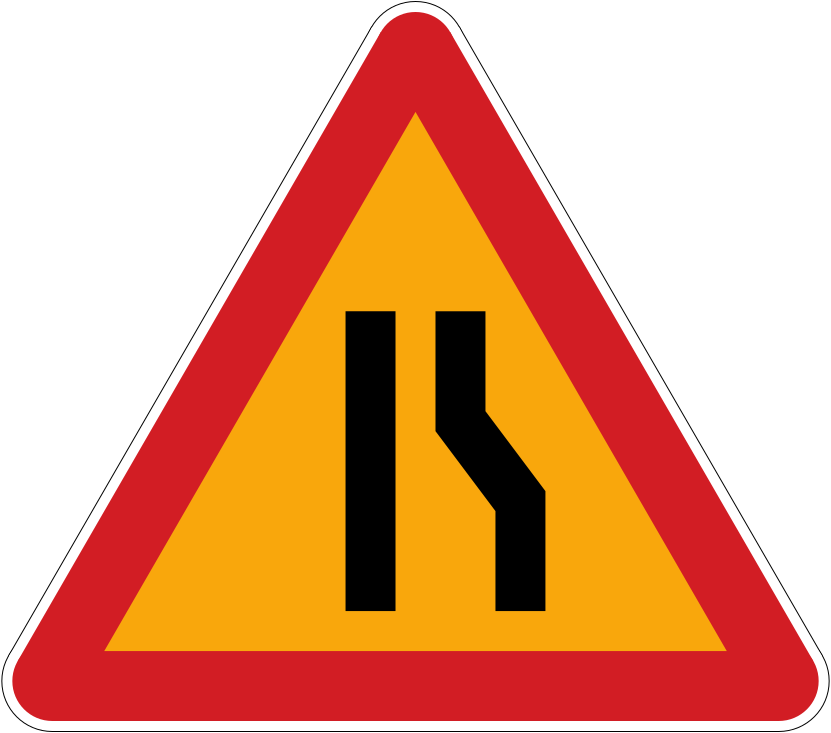 |
119 | Right lane ends (우측차로없어짐) | The right lane disappears ahead | Move left early if you are in the right lane. 120 = left lane ends |
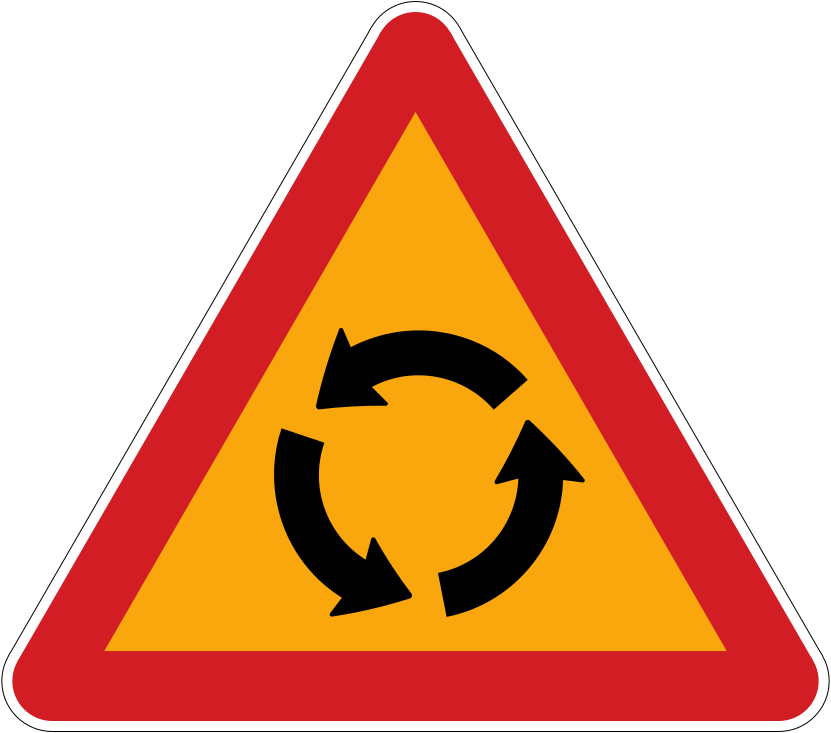 |
109 | Rotary intersection (회전형교차로) | A rotary-type intersection ahead | Easy to confuse with instruction sign 304 (see below) |
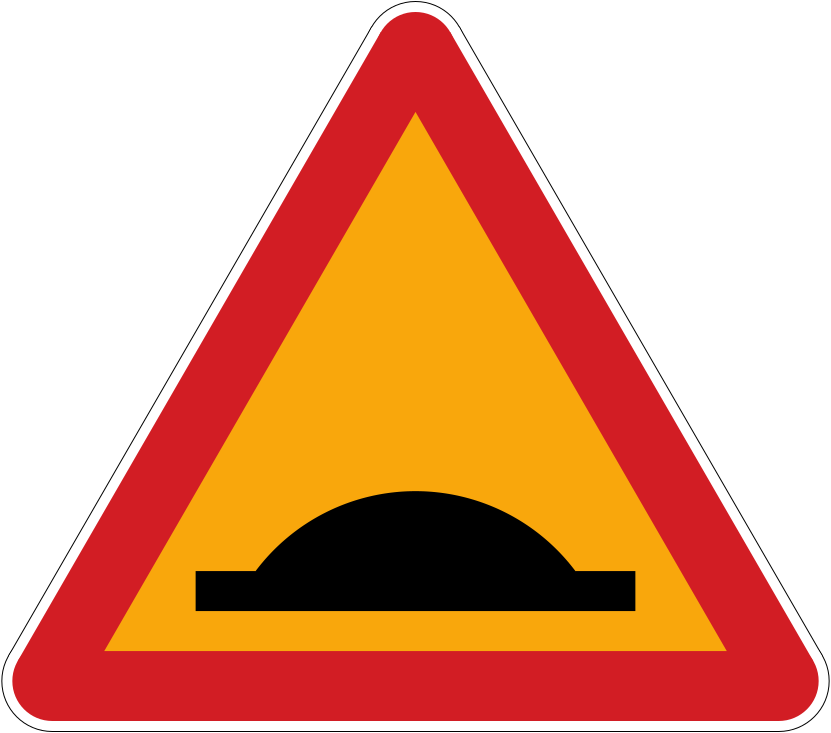 |
129 | Speed bump (과속방지턱) | Speed bump, raised crosswalk or raised intersection | Slow down well before the hump |
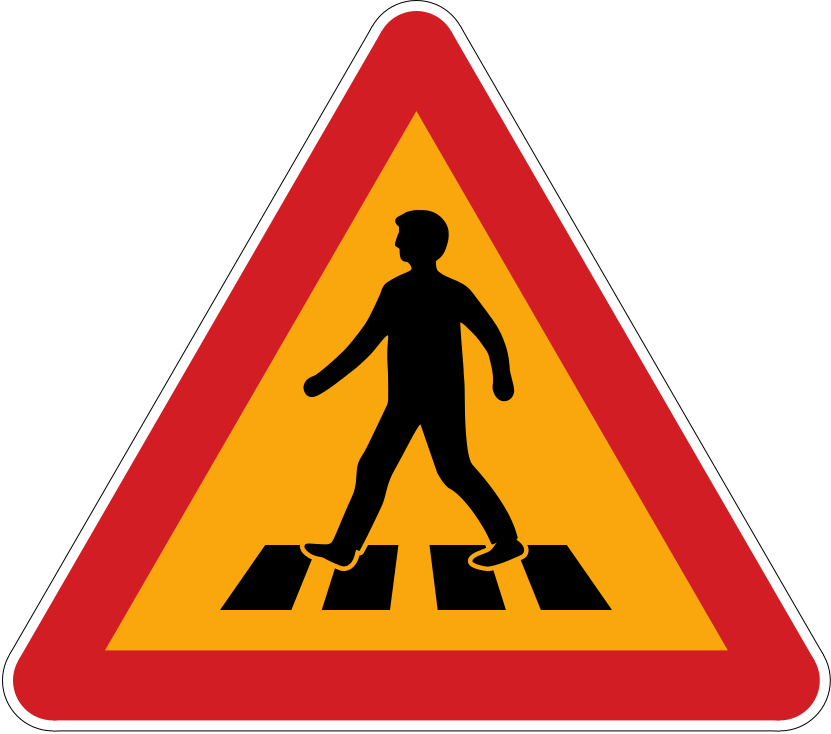 |
132 | Crosswalk (횡단보도) | Crosswalk ahead (mainly where there is no signal) | Stop if someone is crossing or about to cross |
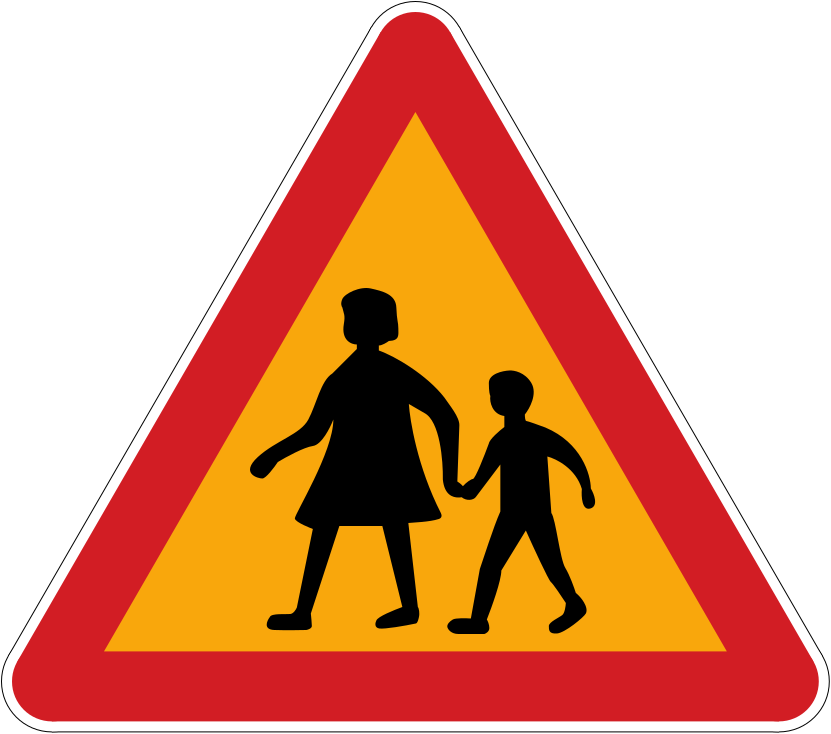 |
133 | Children (어린이보호) | Path or crosswalk used by children ahead | Placed within 200 m before a child protection point or school zone |
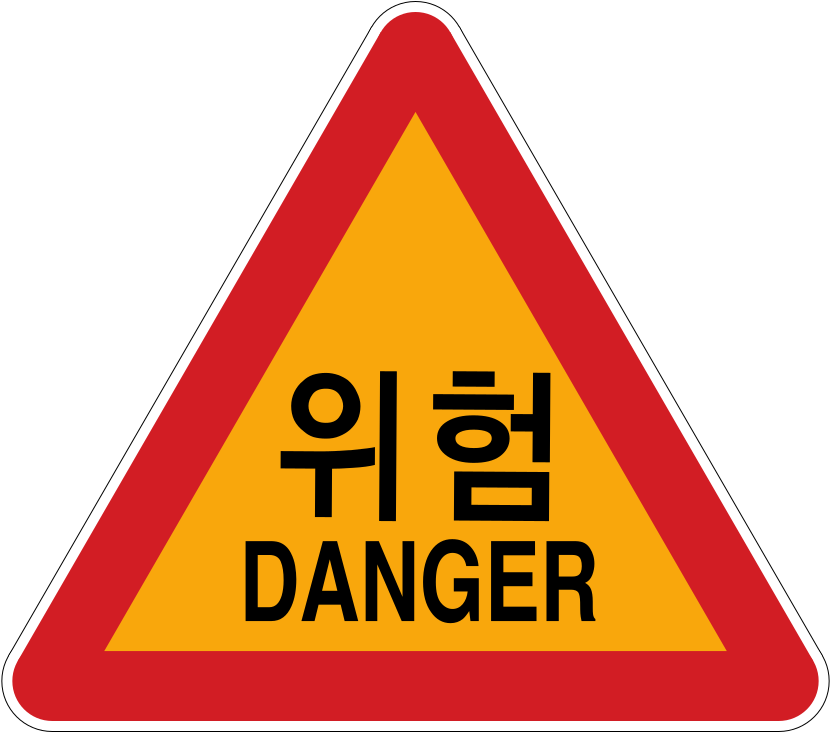 |
140 | Danger (위험) | Various hazards on the road | The specific hazard is often shown on a plate below |
Regulatory signs: “don’t” or “stay within this limit”
Ignoring most regulatory signs is a finable offense, so they matter most both on the test and on the road.
| Sign | No. | Name | Meaning (Annex 6) | Tip |
|---|---|---|---|---|
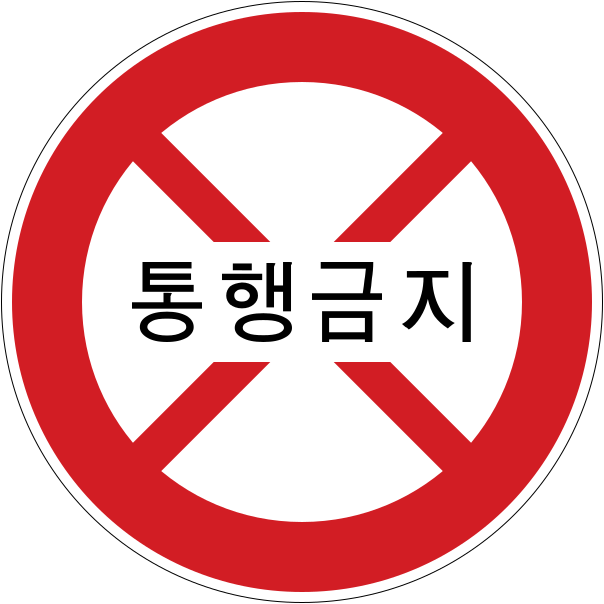 |
201 | Road closed (통행금지) | No pedestrians or vehicles may pass | Nobody gets through, on foot or by car |
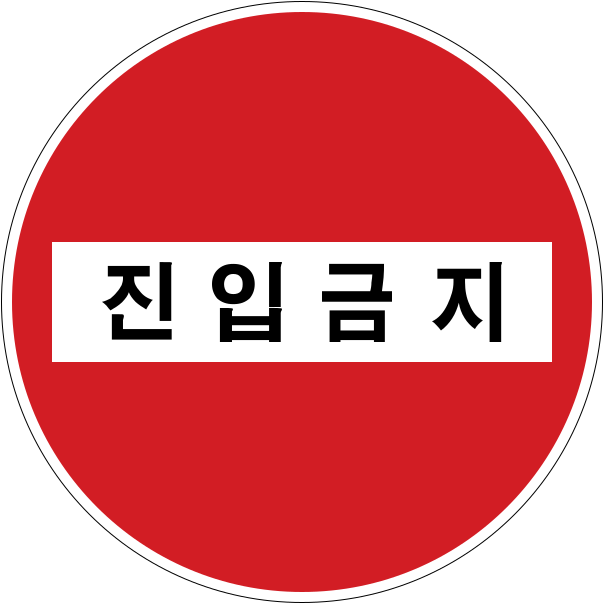 |
211 | No entry (진입금지) | Vehicles may not enter | Often at alley entrances. Find another route |
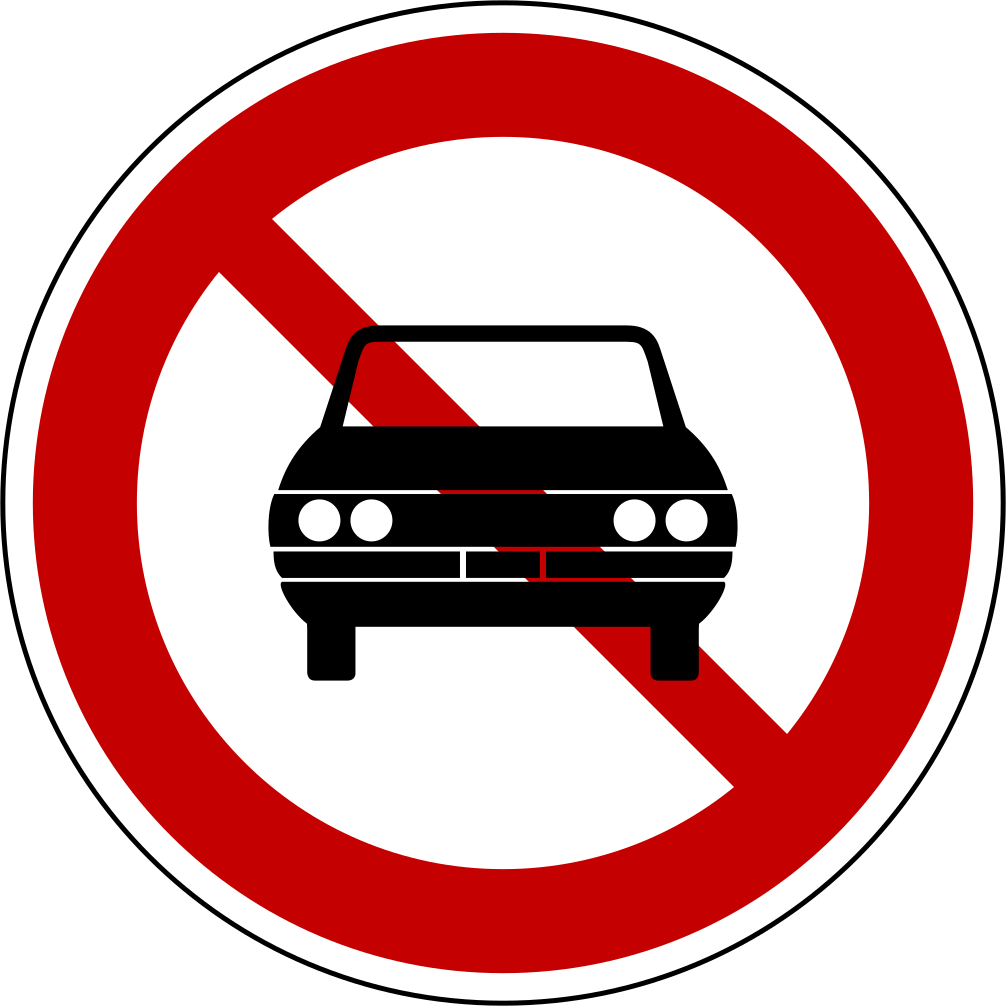 |
202 | No motor vehicles (자동차통행금지) | Motor vehicles may not pass | Only the pictured type is banned (203 trucks, 204 buses with 30+ seats, 205 motorcycles and mopeds) |
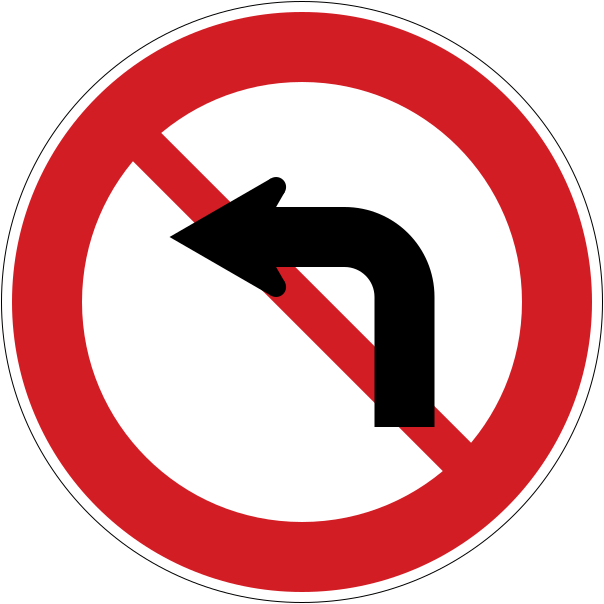 |
214 | No left turn (좌회전금지) | Vehicles may not turn left | Same design as 212 (no straight) and 213 (no right turn), different arrow |
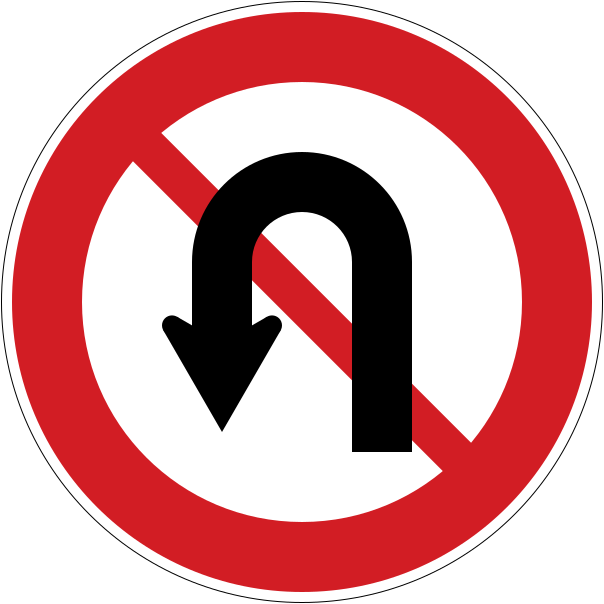 |
216 | No U-turn (유턴금지) | No U-turns | Make U-turns only where a U-turn sign (311) allows |
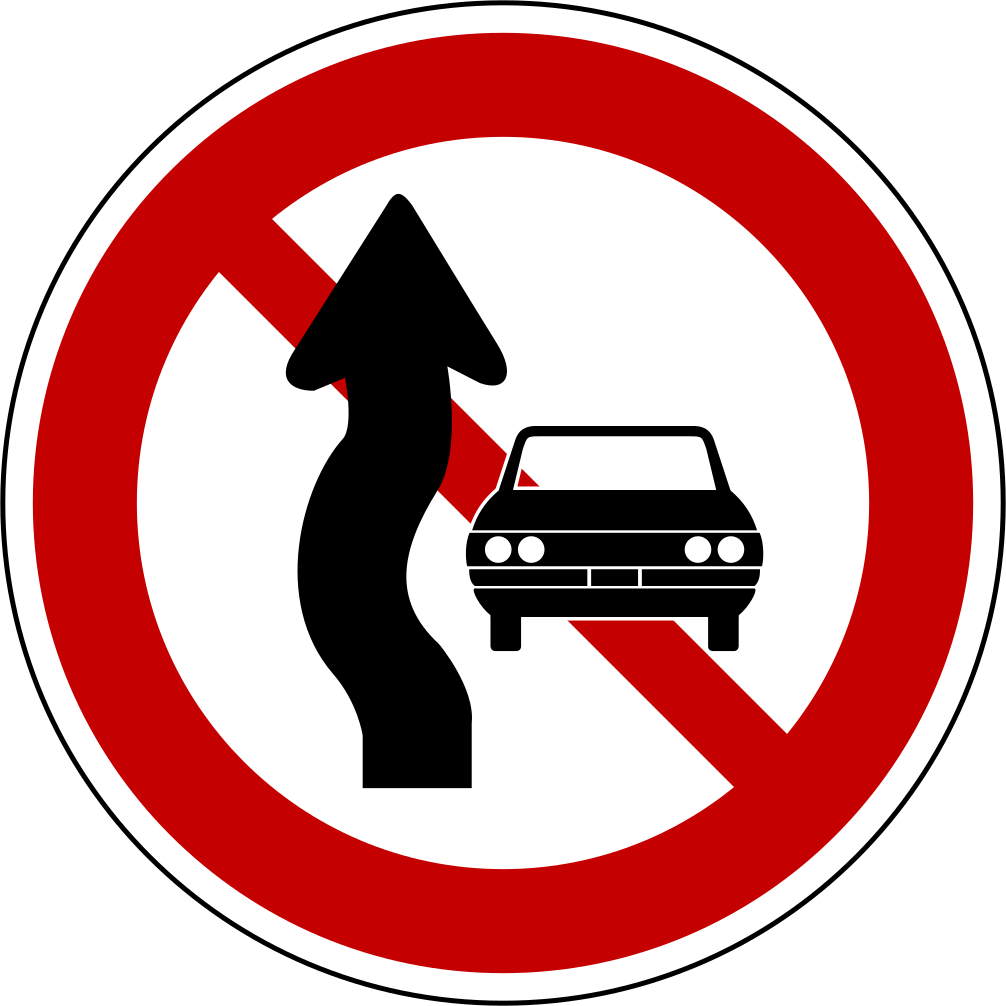 |
217 | No passing (앞지르기금지) | Vehicles may not overtake | Start and end plates mark the zone. No overtaking inside it |
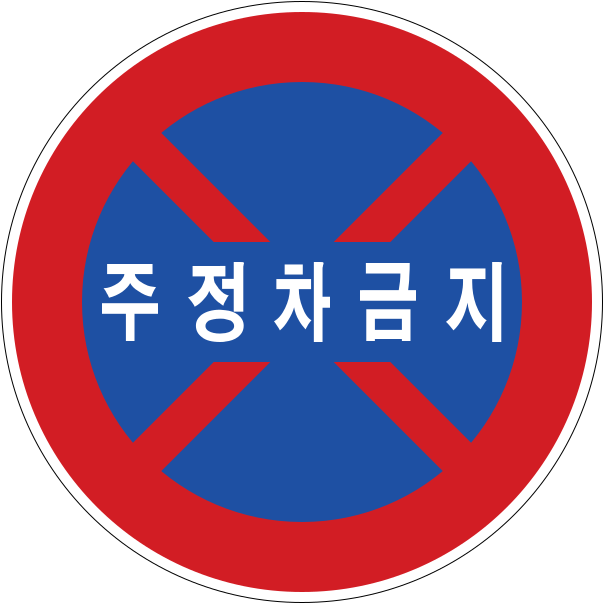 |
218 | No stopping or parking (정차·주차금지) | No stopping and no parking | Blue with a red X. Not even a brief stop |
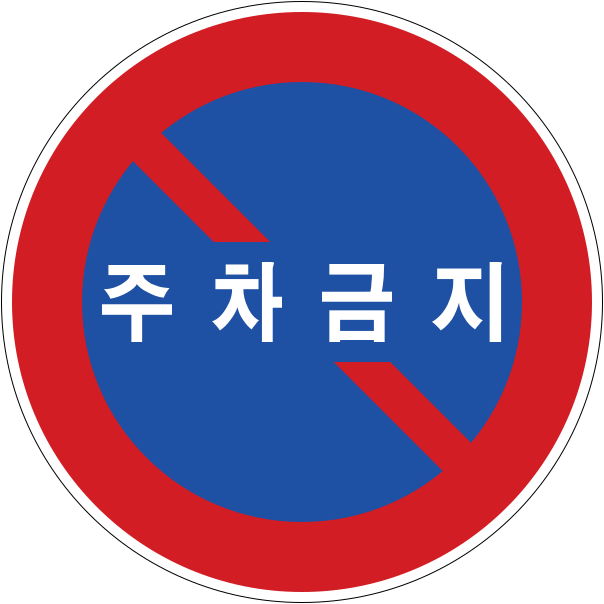 |
219 | No parking (주차금지) | No parking | Blue with one red slash. Brief stops are allowed |
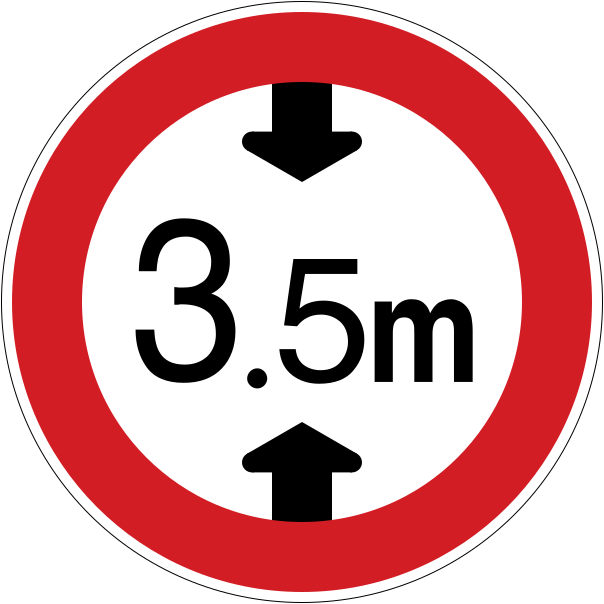 |
221 | Height limit (차높이제한) | Vehicles (including load) taller than shown may not pass | The figure is the structure’s height minus 20 cm. Watch out with loaded trucks and campervans |
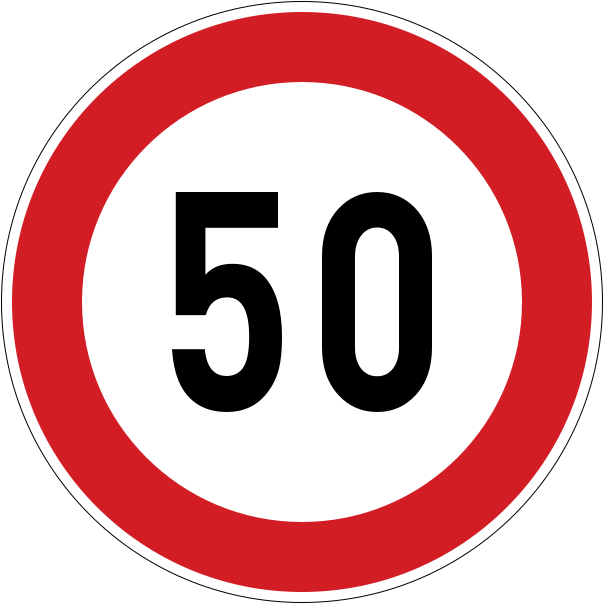 |
224 | Maximum speed (최고속도제한) | The number is the speed limit | Just a number. Going faster is speeding |
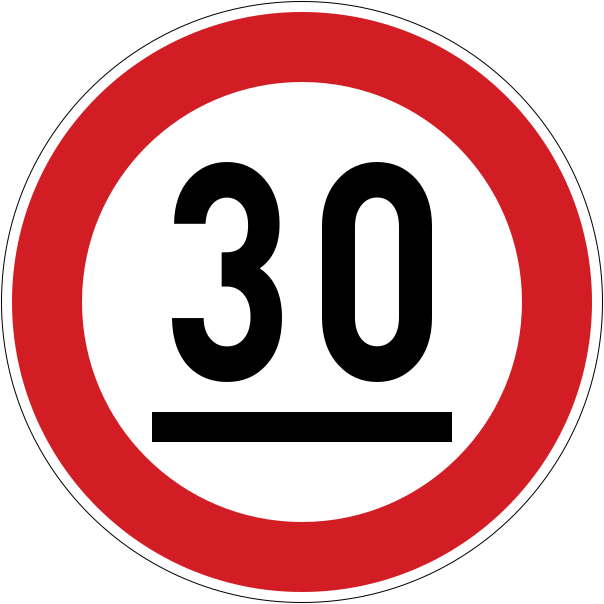 |
225 | Minimum speed (최저속도제한) | The number is the minimum speed | Has a line under the number. Don’t drive slower than this |
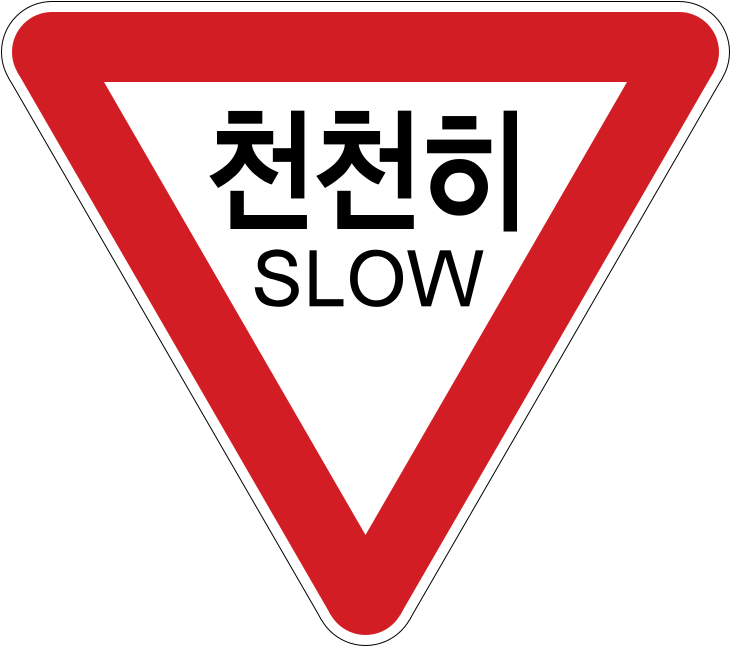 |
226 | Slow (서행) | Place where you must drive slowly | Inverted triangle, “천천히 SLOW” |
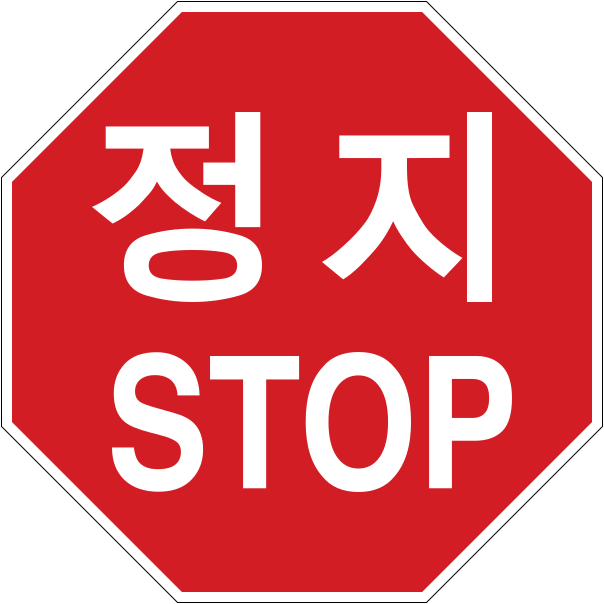 |
227 | Stop (일시정지) | Place where you must stop | Octagon, “정지 STOP”. Stop fully even if no one is around |
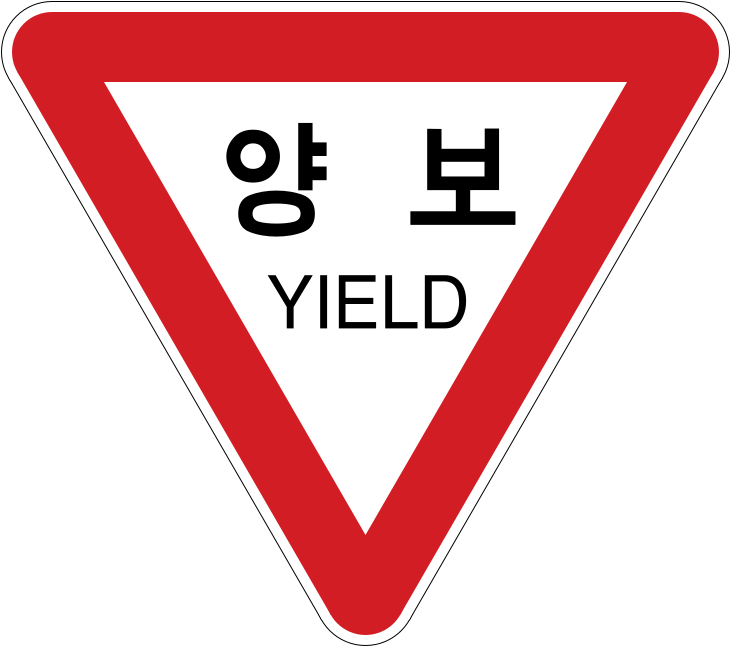 |
228 | Yield (양보) | Place where you must give way | Inverted triangle, “양보 YIELD”. Also at roundabout entries |
Instruction signs: “travel this way”
Instruction signs are blue with white symbols. They don’t forbid; they tell you the way to travel, and you must follow the direction shown.
| Sign | No. | Name | Meaning (Annex 6) | Tip |
|---|---|---|---|---|
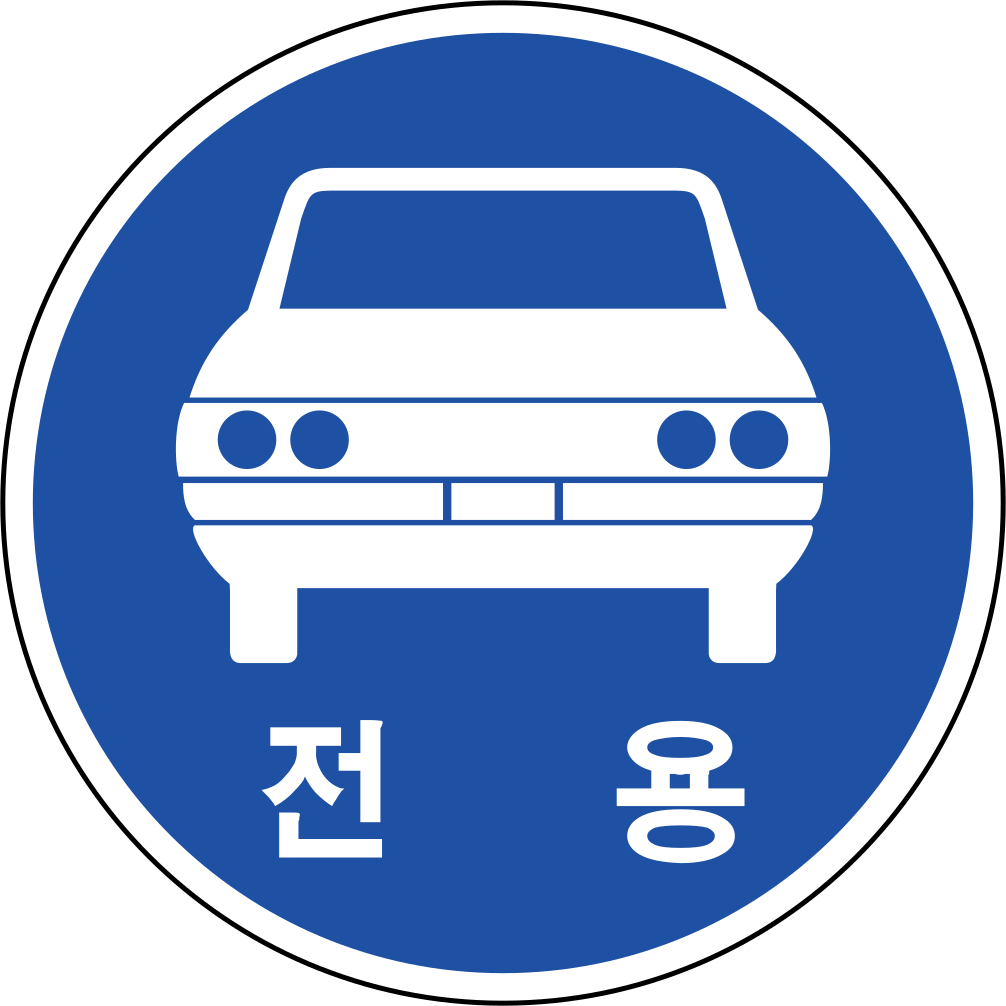 |
301 | Motor-vehicle-only road (자동차전용도로) | Road or area for motor vehicles only | No crossing, U-turns or reversing, as on expressways |
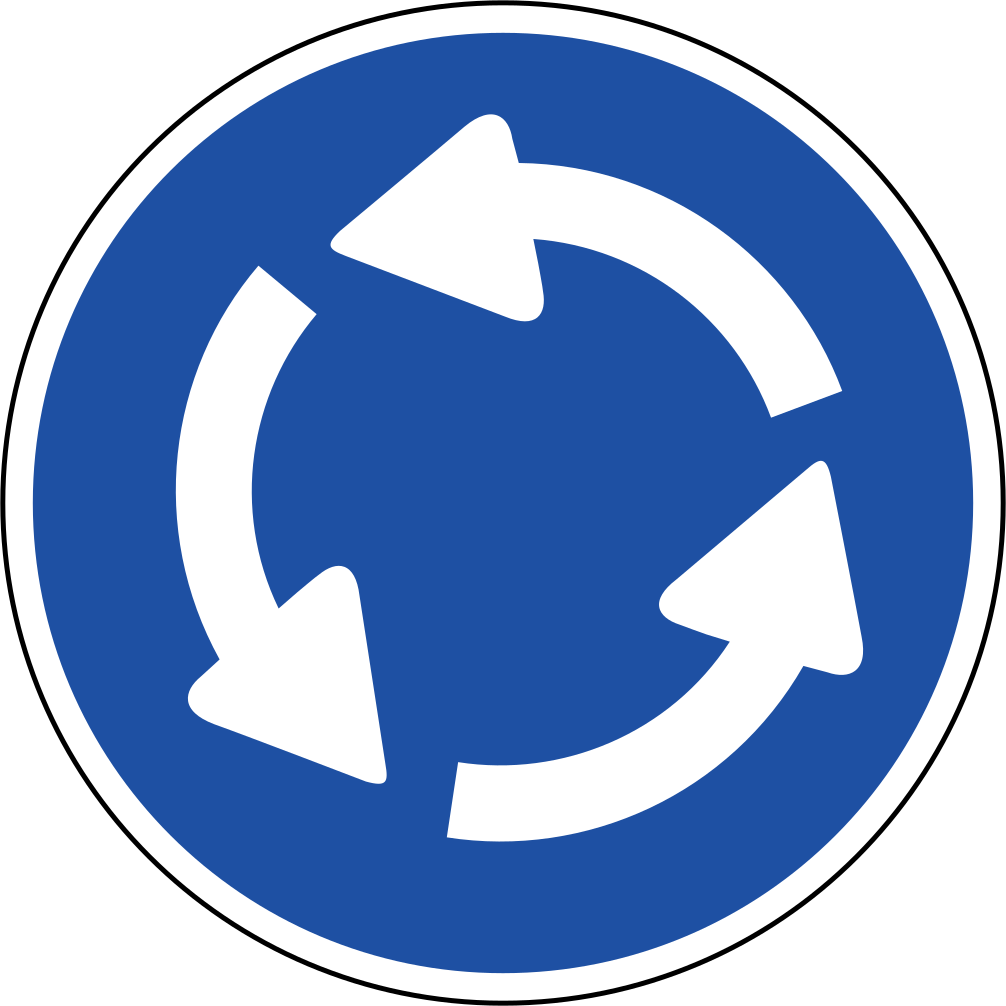 |
304 | Roundabout (회전교차로) | Circulate in the direction of the arrows | Go counterclockwise. Vehicles already circulating go first |
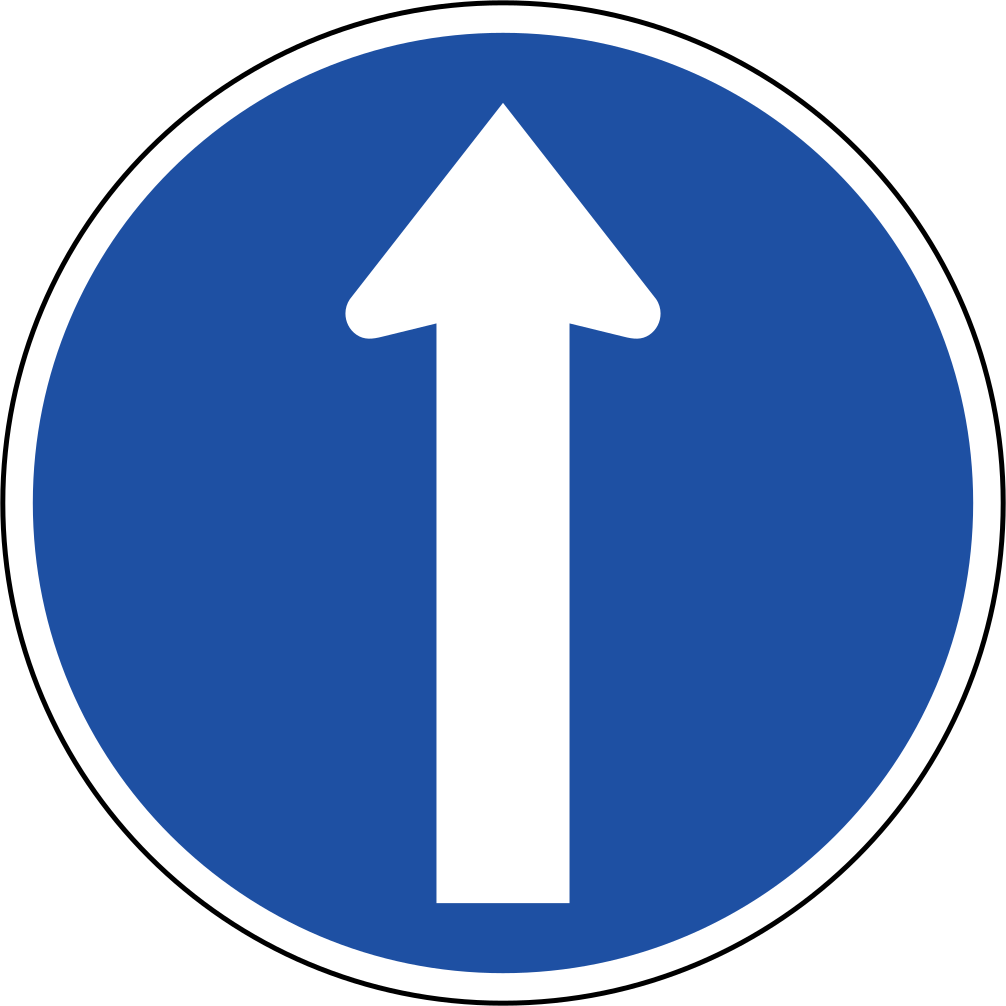 |
305 | Straight ahead (직진) | Vehicles must go straight | 306 right turn, 307 left turn, 308–310 allow two directions |
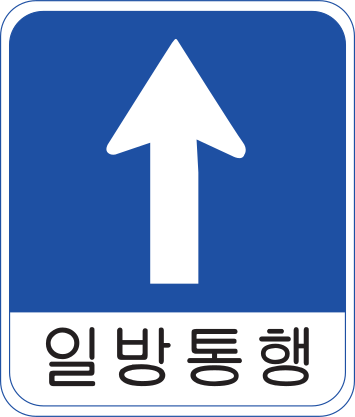 |
328 | One way (일방통행) | One-way traffic, ahead only | 326 = one way to the right, 327 = one way to the left |
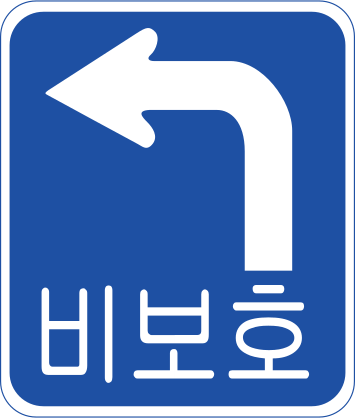 |
329 | Unprotected left turn (비보호좌회전) | On a go signal you may turn left carefully without obstructing oncoming traffic | Only where this sign is posted and only on green. Turning left on red is running a red light |
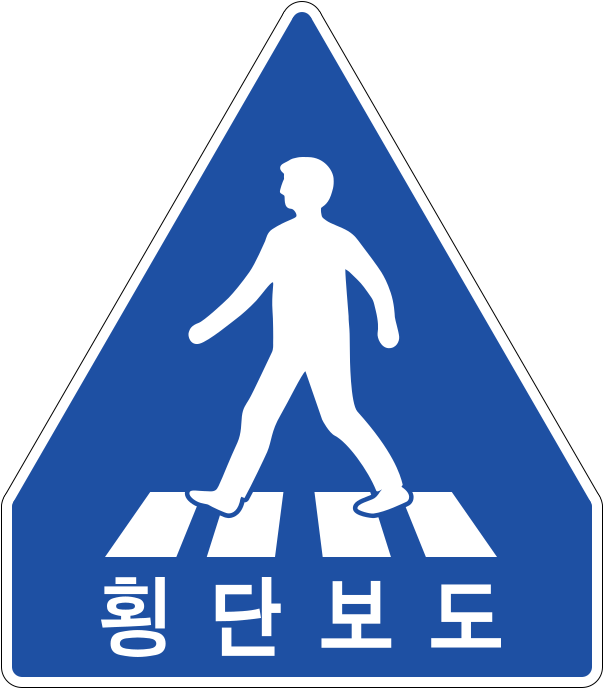 |
322 | Crosswalk (횡단보도) | Pedestrians cross here | Stands right at the crosswalk |
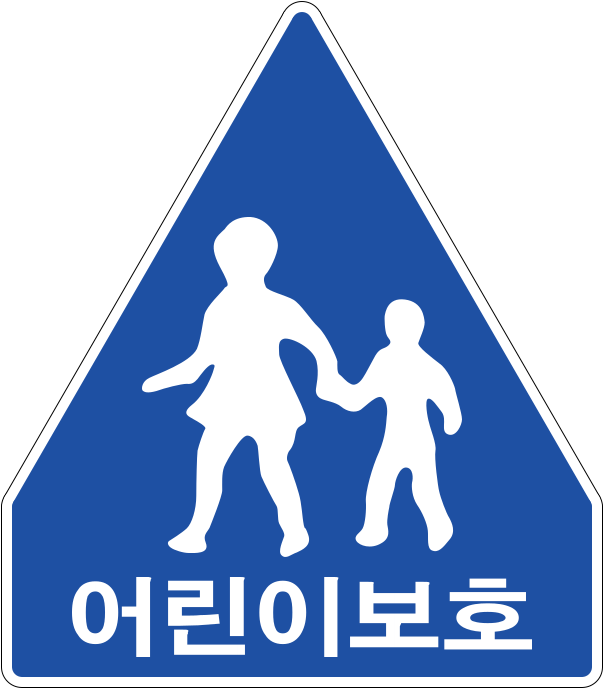 |
324 | Child protection, inside school zone (어린이보호) | Protect children inside the school zone | Posted where the zone begins. 323 = seniors, 324-2 = people with disabilities |
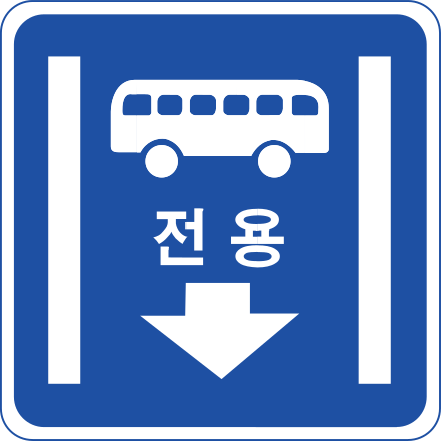 |
330 | Bus-only lane (버스전용차로) | Only vehicles allowed in the bus lane may use it | Hours and sections are on plates below |
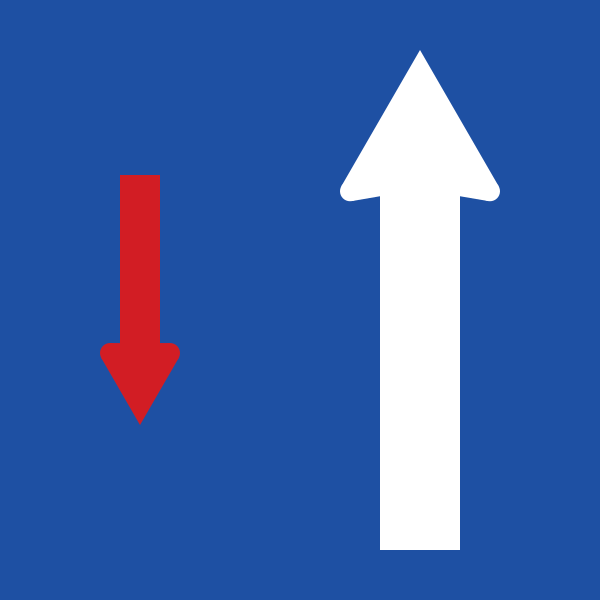 |
332 | Priority (통행우선) | Traffic in the white arrow direction goes first | On narrow roads where cars pass one at a time. The red-arrow side waits |
Supplementary signs: when, where and for whom
Supplementary signs are attached below caution, regulatory or instruction signs to add detail. They never stand alone, so when you see a main sign, read the plate under it too. The main types in Annex 6:
- Distance (401, 402): distance to the facility or place the main sign refers to
- Zone (403), Day (404), Time (405, 406): the section, days and hours a rule applies. A time plate under a No Parking sign gives the restricted hours.
- Vehicle type (414): which vehicles the rule applies to, often abbreviated (승용 = cars, 버스 = buses, 화물 = trucks)
- Section start / within section / section end (417–419): the range of a rule such as no passing or a speed limit; symbols are red
- Right-turn signal (407-2): mounted above a right-turn traffic light to show it is for right turns
- Tow-away zone (428): cars parked in the no-parking area are towed
Road markings: the color tells you the meaning
Road markings are lines, symbols and words on the pavement. Annex 6 assigns colors like this:
| Color | Used for (Annex 6, General Standards 2) | Core meaning |
|---|---|---|
| Yellow | Center lines, no-parking and no-stopping/parking markings, no-stopping boxes, borders of protection-zone start/end markings, school-zone crosswalks, safety zones dividing two-way traffic | Separates opposing traffic or says “don’t stop here” |
| White | Lane lines, lane-change restriction lines, stop lines, crosswalks, arrows and everything else | Lanes and movements for same-direction traffic |
| Blue | Exclusive lanes (bus lanes, etc.), tram-only lanes | Boundary of an exclusive lane |
| Red (or white) | No stopping/parking around fire facilities; border of speed-limit markings in protection zones or residential areas | Special rules near fire facilities and in protection zones |
| Pink, light green, green | Colored guide lines | Which way to go at intersections, interchanges and junctions |
Learn what each line style means:
- Center line (501): you may not cross a solid yellow line. A dashed yellow line may be crossed briefly (for example to overtake) while watching oncoming traffic, and you must return. With a solid-and-dashed pair, you may cross only from the dashed side.
- Lane line (503): solid white = no lane changes; dashed white = lane changes allowed with care.
- Lane-change restriction line (506): solid white line before intersections and crosswalks. On roads with two or more lanes each way it may run up to 50 m back from the stop line. How to change lanes and where overtaking is banned: Lane changes and overtaking.
- Exclusive lane (504): solid blue cannot be crossed; dashed blue may be crossed by other vehicles to enter or leave. When the lane is not in operation, it counts as a normal lane line.
- Around fire facilities (516-3, 516-4): a curb painted red with white “소방시설 주정차금지” within 5 m of a hydrant or similar means no stopping, not even briefly.
- Protection-zone speed limit (518): on red anti-skid pavement in school zones and similar, the speed limit is written in white.
- Stop (521), Yield (522), Stop line (530): if “정지” or a stop line is painted on the road, stop there even without a signpost.
- Safety zone (531), No-stopping box (524): hatched areas. Do not enter a safety zone, and do not stop in a (yellow) no-stopping box.
A yellow line along the edge of the road is a no-parking (515) or no-stopping/parking (516) marking. Check nearby signs and plates for which rule applies and when. See our parking guide for details.
Signs people confuse
| Signs | Difference | How to remember |
|---|---|---|
| 211 No entry vs 201 Road closed |
No entry bans vehicles from entering; Road closed bans pedestrians and vehicles alike | No entry: red disc with a white bar. Road closed: white disc with red ring |
| 227 Stop vs 226 Slow |
Stop means wheels completely still (Act Art. 2(30)); Slow means slow enough to stop immediately (Art. 2(28)) | Octagon = stop, inverted triangle = slow |
| 226 Slow vs 228 Yield |
Both inverted triangles. Slow = reduce speed; Yield = let other traffic go first | Read the English: SLOW vs YIELD |
| 224 Max vs 225 Min |
Minimum speed has an underline. Going slower is not a violation when traffic is congested or it is otherwise unavoidable (Act Art. 17(3)) | Underline = floor (minimum) |
| 219 No parking vs 218 No stopping/parking |
No parking (one slash) allows brief stops; No stopping/parking (X) forbids even stopping | One line = one ban, two lines = both banned |
| 109 vs 304 |
Yellow 109 warns “a rotary is ahead”; blue 304 instructs “circulate this way” | Yellow = heads-up, blue = do it now |
| 133 vs 324 |
133 warns before a child area; 324 instructs protection inside the school zone | Crosswalk signs 132 (caution) and 322 (instruction) work the same way |
| 305 Straight vs 328 One way |
Straight-ahead means only straight at this point; One-way means the whole road runs one direction | One-way signs are squares with “일방통행” written on them |
No passing applies in some places even without a sign. You may never overtake in an intersection, in a tunnel or on a bridge; on curves, near hilltops and on steep downhill slopes it is banned where the provincial police have designated it with sign 217 (Act Art. 22(3)). Likewise, intersections, crosswalks and similar places are no-stopping/no-parking areas with or without a sign (Art. 32).
Fines for ignoring signs
Fines (범칙금) for a passenger-car driver stopped by the police (Enforcement Decree, Annex 8). If an unmanned camera catches you, the owner receives an administrative fine (과태료) of a different amount.
| Offense | Basis | Fine (car) |
|---|---|---|
| Disobeying a signal or instruction | Act Art. 5 | KRW 60,000 |
| Overtaking where/when prohibited | Art. 22 | KRW 60,000 |
| Violating a road closure or restriction | Art. 6 | KRW 40,000 |
| Stopping/parking where prohibited, parking where prohibited | Arts. 32, 33 | KRW 40,000 |
| Failing to slow down / failing to stop | Art. 31 | KRW 30,000 |
| Driving below the minimum speed | Art. 17(3) | KRW 20,000 |
Some offenses also add penalty points. See Fines and penalty points.
Practice questions
- A No Entry sign at the entrance of an alley
- Which statement about the Stop sign is wrong?
- How to drive where the Slow sign is posted
- Which statement about the Minimum Speed sign is wrong?
- What you must not do at the roadside under a No Stopping/Parking sign
- Which statement about the No Parking sign is correct?
- About the No Passing sign
- An intersection with an Unprotected Left Turn sign
- What the Priority sign means
For the test format see the written test guide, and practice with the mock exam. For reading signs and signals together at junctions, see Intersections and Road rules foreigners get wrong.
FAQ
What if a sign and a police officer say different things?
You must obey both traffic signals and safety signs. But if a police officer (or authorized assistant) directing traffic gives a different signal or instruction, follow the officer (Road Traffic Act Art. 5(2)).
At a Stop sign, can I roll through if no one is coming?
No. Stopping means bringing the wheels to a complete halt, so stop once at the line even when the road is empty. Rolling through is a failure-to-stop violation.
What is the difference between stopping and parking?
Stopping (정차) is halting for no more than 5 minutes in a way that isn’t parking. Parking (주차) is keeping the car stationary to wait for passengers, load goods and so on, or leaving it so you cannot drive off immediately (Act Art. 2(24), (25)). If you leave the car and can’t drive away at once, it is parking even if it’s under 5 minutes.
Can I cross a solid yellow center line to overtake?
No. A solid yellow line may not be crossed. You may only cross briefly from a dashed yellow line (or the dashed side of a double line), watching oncoming traffic. Crossing a solid line is a center-line violation: KRW 60,000 for a car.
Do road signs have English?
Some do: Stop (STOP), Slow (SLOW) and Yield (YIELD) carry English, but many such as No Entry and No Parking show Korean only. That’s why practicing by shape and color matters. If you drive on an International Driving Permit, see the International Driving Permit guide.